
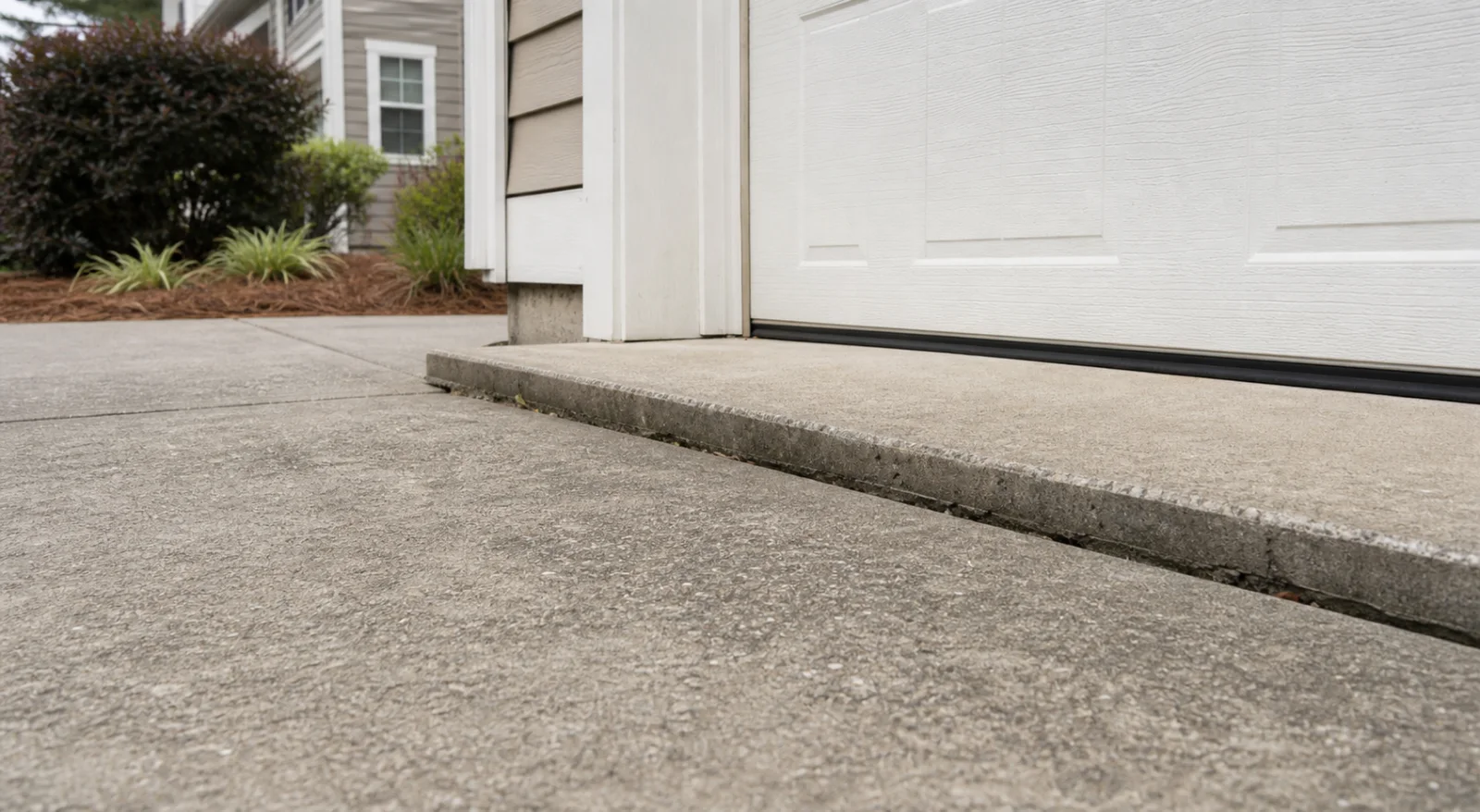
Which driveway panels have moved?
Count the panels or joints. Mark each edge that looks high or low. Include the garage, curb, apron, walk, steps, or street edge when they meet the work area.
Use one wide photo to show slope. Use a safe close photo with a ruler or simple gauge to show the height change.
How does the driveway work today?
Note parking, heavy vehicles, tires hitting an edge, garage-door clearance, standing water, runoff, downspouts, and recent drainage work.
A lift may change the height without stopping the water source. Ask how the plan affects water flow and nearby surfaces.
Does the work reach the public right-of-way?
Greenville County says work in a county road right-of-way can need an encroachment permit. This can include driveway tie-ins and drainage work. The road owner and work scope matter.
Ask the responsible road agency before work reaches an apron, culvert, public walk, ditch, curb, or right-of-way. This site cannot decide the rule for your address.
What access details should you share?
Share gates, hose paths, sprinklers, known utilities, parking needs, and when the driveway must be open again.
Ask the provider to name each included panel, how the garage and street edges will be handled, and what is not included.
Primary sources
- Greenville County — Encroachment permitsGreenville County · Accessed July 30, 2026
- American Concrete Institute — Slabjacking RAP 11American Concrete Institute · Accessed July 31, 2026
Sources support general guidance. They do not determine the condition or appropriate repair for a specific property.