
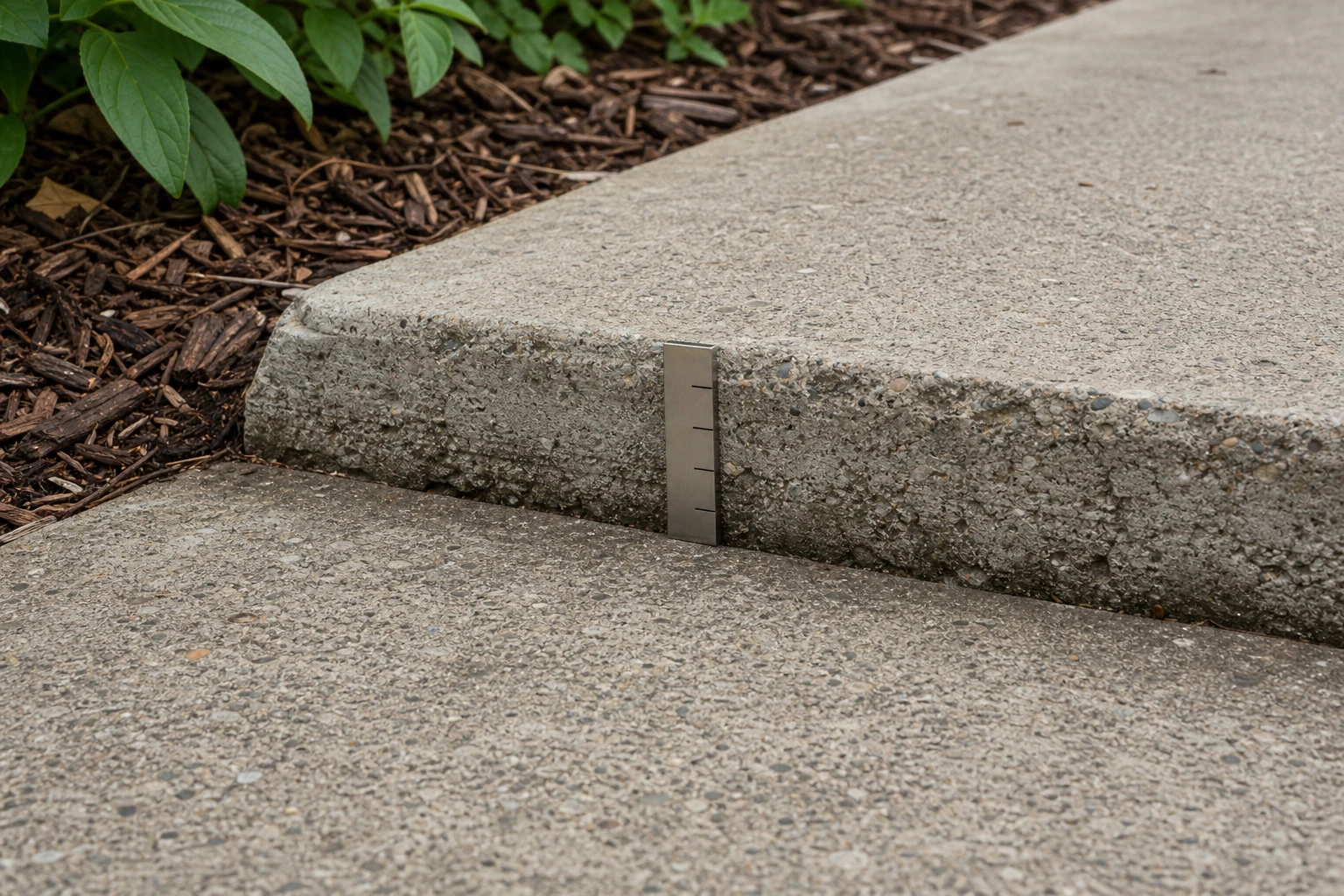
Which slab edge is really low?
One slab may drop and make the slab beside it look high. Photograph both travel directions and measure the height change when it is safe.
Do not guess which slab moved. An on-site review can use a level, straightedge, or elevation check for better context.
What should you note about water and gaps?
Record standing water, runoff, exposed washout, edge gaps, downspouts, and recent drainage changes. These signs do not show the full condition below the slab.
Do not probe hidden spaces or utility areas. Keep people away from an unstable edge.
How should you record cracks and movement?
Record each crack’s size and location. Note if it crosses a joint or reaches another part. Show nearby doors, curbs, steps, pool edges, drains, walls, and equipment.
A crack may remain after lifting. Ask what should move, what may still show, and whether crack or joint work costs extra.
Which signs may need another specialist?
Wall or foundation movement, broken utilities, pool-shell movement, failing retaining walls, crumbling concrete, or an active safety problem can be more than a leveling job.
Limit access when the area seems unsafe. Contact the right utility, building, foundation, pool, drainage, or road expert.
Primary sources
- American Concrete Institute — Slabjacking RAP 11American Concrete Institute · Accessed July 31, 2026
Sources support general guidance. They do not determine the condition or appropriate repair for a specific property.